
ASPHALT MAINTENANCE & PROTECTION
Reliable Asphalt Sealcoating Mississippi Property Owners Trust
Protect and refresh your asphalt with professional sealcoating from Chris Paving MS. We sealcoat residential driveways, commercial parking lots, private roads, and other paved surfaces throughout Mississippi.
Established 1997
Licensed & Insured
Residential & Commercial
Free Project Estimates
Protect and Refresh Your Asphalt Surface
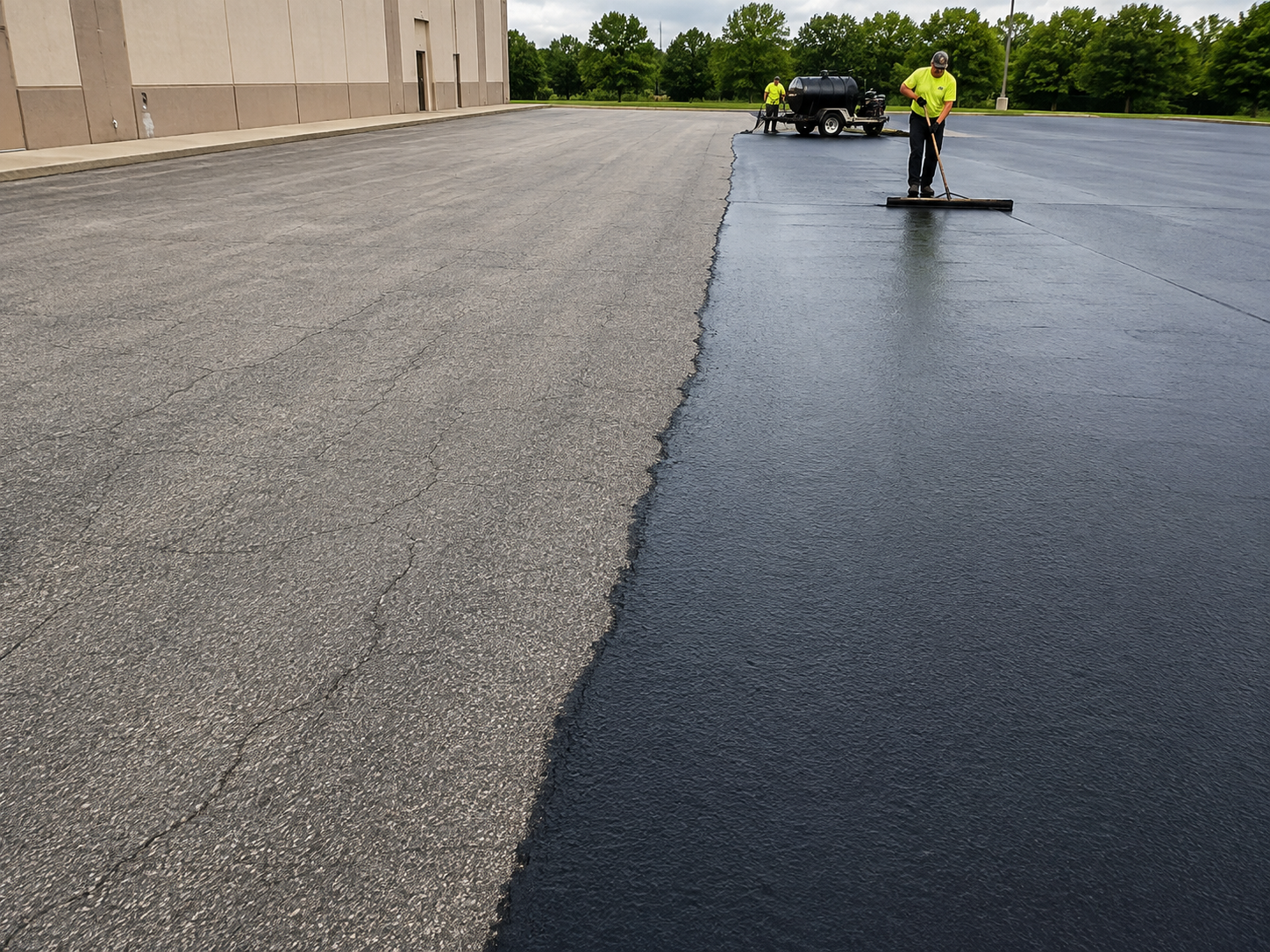
Sealcoating applies a protective coating over stable asphalt to help slow oxidation, resist moisture penetration, and reduce everyday surface wear. It also restores a clean, uniform appearance that improves the overall presentation of a driveway, parking lot, or private road.
Before sealcoat is applied, Chris Paving MS evaluates the pavement and identifies cracks, potholes, failed patches, or other damage that should be repaired first. Proper preparation helps the coating bond evenly and perform as intended.
- Residential and commercial sealcoating
- Thorough asphalt surface preparation
- Necessary repairs identified before coating
- Clean, uniform finished appearance
ASPHALT PROTECTION SERVICES
Professional Sealcoating Services
Chris Paving MS provides complete asphalt sealcoating services for residential, commercial, and private paved surfaces. Each project includes careful preparation and an application plan based on the pavement’s condition and use.
Residential Driveway Sealcoating
Refresh faded residential asphalt and help protect the driveway from sunlight, moisture, oxidation, and everyday vehicle traffic.
Commercial Parking Lot Sealcoating
Restore a clean, professional appearance while helping protect parking surfaces exposed to traffic, weather, and automotive fluids.
Private Roads and Access Lanes
Apply protective sealcoat to stable private roads, neighborhood lanes, and paved entrances used by residential or commercial traffic.
Surface Cleaning and Preparation
Remove dirt, loose material, vegetation, and surface contaminants so the sealcoat can bond properly with the existing asphalt.
Crack Sealing and Minor Repairs
Address appropriate cracks and minor pavement defects before sealcoating to help reduce moisture intrusion beneath the finished surface.
Restriping and Pavement Markings
Reapply parking spaces, traffic markings, fire lanes, and accessible areas after the sealcoat has properly cured.
Sealcoating does not correct potholes, unstable pavement, or structural base failure. Those areas must be properly repaired before the protective coating is applied.
PROTECT YOUR PAVEMENT
Give Your Asphalt a Fresh Layer of Protection
Professional sealcoating can help slow surface deterioration, improve appearance, and protect stable asphalt from everyday exposure. Chris Paving MS can evaluate your pavement and determine whether it is ready for sealcoating or needs repairs first.
Prefer to speak with us?
Call (228) 918-PAVE (7283)
Paving experience since 1997 · Licensed and insured · MS State Lic #27396-SC
PRESERVE YOUR PAVEMENT
How Sealcoating Helps Protect Asphalt
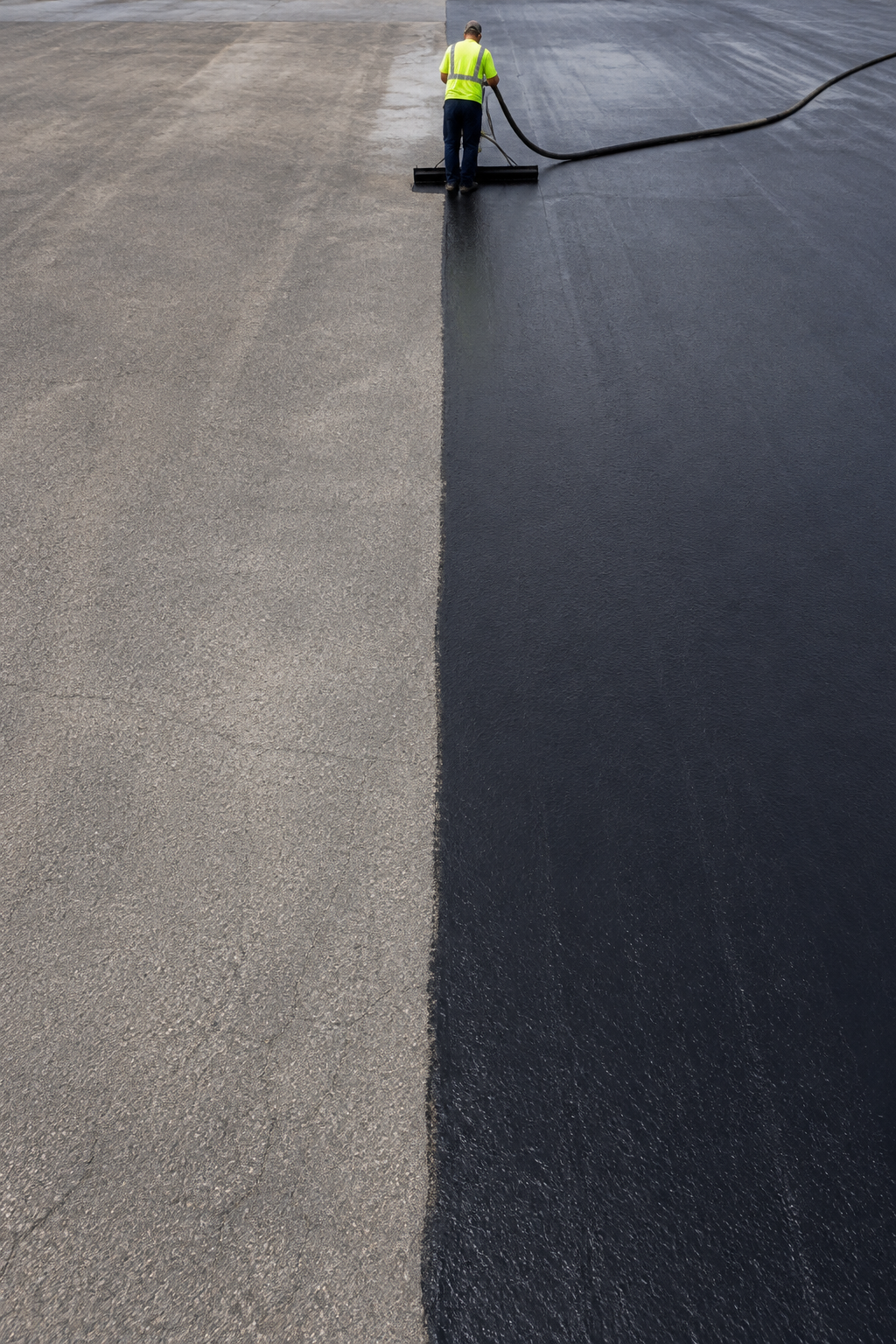
Asphalt contains binding oils that help hold the pavement together and provide flexibility. Exposure to sunlight, oxygen, moisture, traffic, and automotive fluids gradually dries and weakens the surface, causing it to fade from deep black to gray.
Asphalt sealcoating Mississippi creates a protective surface layer that helps reduce the asphalt’s direct exposure to these damaging conditions.
Slows Oxidation and Sun Damage
Ultraviolet rays and oxygen gradually dry the asphalt binder, making the pavement more brittle and susceptible to surface cracking. Sealcoating helps slow this oxidation process.
Helps Resist Moisture and Spills
A properly applied coating helps reduce moisture penetration through the pavement surface and provides added resistance to minor oil, fuel, and automotive-fluid spills.
Reduces Everyday Surface Wear
Sealcoat provides a replaceable protective layer that absorbs some of the wear caused by traffic, weather, and routine pavement use.
Restores a Uniform Appearance
The dark finish renews the appearance of faded asphalt and creates a clean background for parking-space lines and other pavement markings.
Sealcoating protects the surface of asphalt that remains structurally stable. It cannot correct potholes, deep cracks, depressions, drainage problems, or base failure, which must be repaired separately. Learn more about how sealcoating protects asphalt.
FROM PREPARATION TO COMPLETION
Our Asphalt Sealcoating Mississippi Process
A successful sealcoating project depends on pavement condition, thorough preparation, proper application, and adequate curing time. Chris Paving MS follows a careful process designed to produce a clean, uniform protective finish.
01
Inspect & Evaluate
We inspect the pavement, identify existing damage, and determine whether the asphalt is a suitable candidate for sealcoating.
02
Clean and Prepare
Dirt, vegetation, loose material, and surface contaminants are removed so the coating can properly bond with the asphalt.
03
Repair and Protect
Appropriate cracks and damaged areas are addressed, while curbs, concrete, landscaping, and adjoining surfaces are protected from overspray.
04
Apply and Cure
Sealcoat is applied evenly under suitable weather conditions, and the area remains closed until the finished surface has adequately cured.
CHOOSING THE RIGHT SERVICE
Sealcoating vs. Resurfacing: What’s the Difference?
Sealcoating and resurfacing can both improve the appearance of asphalt, but they serve very different purposes. The right option depends on the pavement’s condition and whether the damage is limited to the surface or extends deeper into the asphalt.
Sealcoating Protects Existing Asphalt
Sealcoating applies a protective coating over the existing pavement. It is intended for asphalt that remains structurally stable but has begun to fade, oxidize, or show normal surface wear.
Sealcoating does not add a new layer of asphalt and cannot correct potholes, deep cracks, depressions, or unstable pavement.
Sealcoating may be appropriate when:
- The asphalt remains structurally sound
- The surface has faded from black to gray
- Wear and oxidation are primarily superficial
- Required cracks and minor damage can be repaired first
- The property owner wants preventive protection
Resurfacing Installs New Asphalt
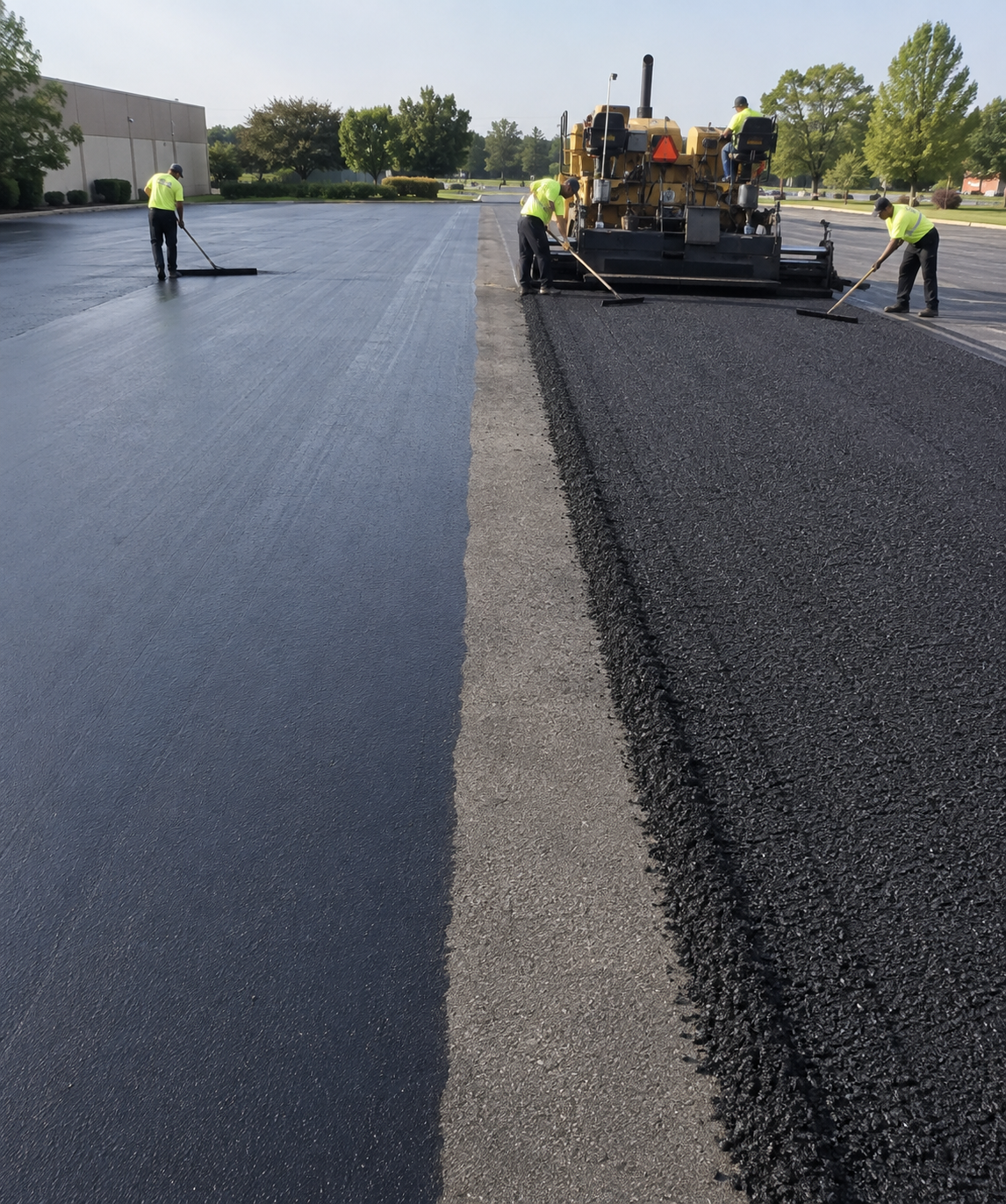
Resurfacing involves preparing the existing pavement and installing a new layer of asphalt over it. It is generally considered when deterioration is too extensive for sealcoating, but the underlying base remains stable.
Resurfacing may be appropriate when:
- Wear or cracking affects much of the surface
- The existing asphalt needs a new driving layer
- Surface elevations permit an additional asphalt layer
- The supporting pavement base remains stable
- Localized failures can be repaired before the overlay
When Replacement May Be Necessary
Pavement with widespread base failure, severe movement, extensive alligator cracking, or repeatedly failing repairs may require partial or complete replacement rather than sealcoating or resurfacing.
Chris Paving MS evaluates the pavement and recommends sealcoating, repair, resurfacing, or replacement based on its actual condition—not simply whichever service happens to have the shiniest brochure.
WHEN TO CONSIDER SEALCOATING
Signs Your Asphalt May Be Ready for Sealcoating
Sealcoating works best as preventive maintenance while the pavement remains structurally stable. The following conditions may indicate that the surface is ready for professional evaluation and protective treatment.
Faded Gray Appearance
Asphalt that has faded from deep black to gray is showing the visible effects of sunlight exposure and oxidation.
Dry or Weathered Surface
A dry, rough-looking surface may indicate that the asphalt binder is aging and losing some of its original flexibility.
Fine Surface Cracks
Small cracks may signal early pavement aging. Appropriate cracks should be sealed or repaired before sealcoat is applied.
Worn High-Traffic Areas
Drive lanes, entrances, parking spaces, and vehicle-turning areas may lose their protective finish faster than less-traveled pavement.
Previous Coating Has Worn Away
Uneven color or exposed gray asphalt may indicate that an older sealcoat application has reached the end of its useful service life.
Stable but Aging Pavement
Pavement that remains smooth and structurally sound but shows normal aging may be a good candidate for preventive sealcoating.
Potholes, deep cracks, depressions, loose asphalt, and widespread alligator cracking are not signs that pavement simply needs sealcoating. Those conditions should be evaluated for repair, resurfacing, or replacement before any protective coating is applied.
RESIDENTIAL & COMMERCIAL SEALCOATING
Properties and Pavement Areas We Sealcoat
Chris Paving MS provides professional sealcoating for stable residential, commercial, industrial, and private asphalt surfaces throughout Mississippi.
Residential Driveways
Commercial Parking Lots
Private Roads and Lanes
Apartment and HOA Communities
Retail and Office Properties
Churches and Schools
Industrial and Warehouse Facilities
Hotels and Hospitality Properties
Municipal and Public Properties
WHY SEALCOATING MATTERS
Benefits of Professional Asphalt Sealcoating
When applied to properly prepared and structurally stable pavement, sealcoating provides a replaceable protective surface that improves appearance and supports a proactive asphalt-maintenance plan.
Slows Asphalt Oxidation
Sealcoating helps reduce direct exposure to sunlight and oxygen, which gradually dry and weaken the asphalt binder.
Helps Resist Moisture
A properly applied coating helps reduce surface moisture penetration that can contribute to cracking and pavement deterioration.
Added Spill Resistance
The finished coating provides additional resistance to minor oil, fuel, and automotive-fluid spills that can soften exposed asphalt.
Restores a Clean Appearance
Sealcoating renews faded gray asphalt with a dark, uniform finish that improves the appearance of the surrounding property.
Enhances Pavement Markings
Fresh striping and traffic markings stand out clearly against a newly sealcoated surface, improving organization and visibility.
Supports Longer Pavement Life
Regular preventive maintenance can help delay surface deterioration and reduce the likelihood of more extensive pavement work.
EXPERIENCE YOU CAN RELY ON
Why Choose Chris Paving MS for Sealcoating?
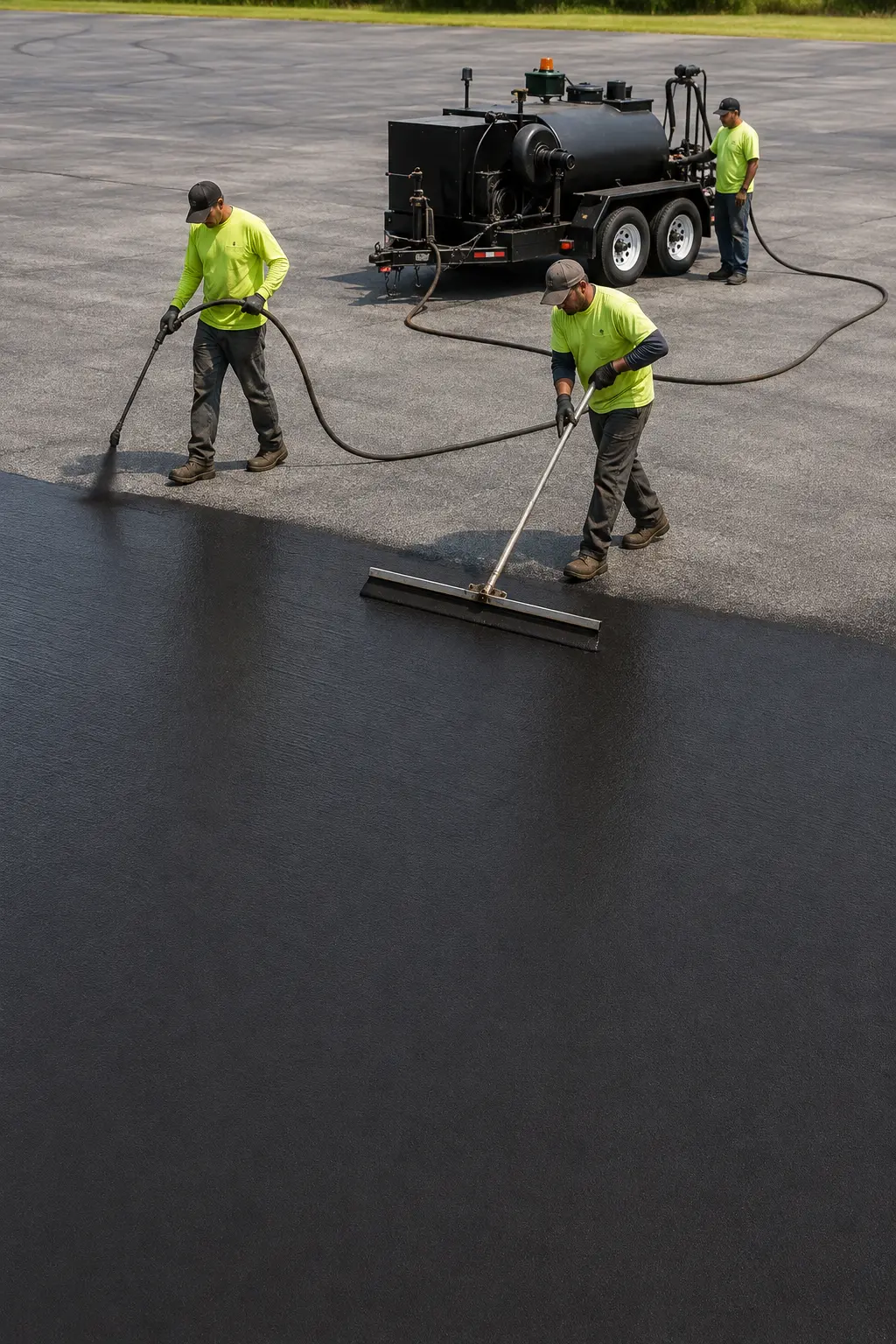
Effective sealcoating begins with an honest evaluation of the pavement and careful surface preparation. Chris Paving MS combines decades of paving experience with practical maintenance recommendations and professional application methods.
Paving Experience Since 1997
Chris Shannon brings more than 25 years of hands-on paving and construction experience to residential and commercial asphalt projects.
Licensed and Insured
Chris Paving MS is licensed and insured to provide professional paving and pavement-maintenance services throughout Mississippi.
MS State Lic #27396-SC
Complete Pavement Evaluation
We inspect the asphalt for cracks, potholes, drainage issues, unstable areas, and other conditions that should be addressed before sealcoating.
Thorough Surface Preparation
The pavement is cleaned and prepared to promote proper coating adhesion and create a more consistent finished appearance.
Practical Recommendations
We will explain whether the pavement is ready for sealcoating or would benefit from repair, resurfacing, or replacement instead.
Residential and Commercial Capabilities
We sealcoat appropriate driveways, parking lots, private roads, access lanes, and other stable asphalt surfaces.
SEALCOATING QUESTIONS
Asphalt Sealcoating FAQs
Learn more about asphalt sealcoating, pavement preparation, curing time, and how to determine whether your surface is a suitable candidate.
What does asphalt sealcoating do?
Sealcoating applies a protective coating over stable asphalt to help slow oxidation, reduce surface exposure to moisture and automotive fluids, and restore a dark, uniform appearance. It is preventive maintenance rather than a structural repair.
How often should asphalt be sealcoated?
Many asphalt surfaces are evaluated for sealcoating approximately every two to three years. The appropriate schedule depends on traffic, sunlight, weather exposure, pavement condition, previous applications, and how quickly the coating wears.
When should new asphalt first be sealcoated?
New asphalt needs time to cure and release excess oils before it is sealed. A waiting period of approximately six to twelve months is common, but the proper timing depends on the asphalt mixture, weather, installation conditions, and pavement use.
Will sealcoating repair cracks or potholes?
No. Sealcoating does not repair potholes, deep cracks, depressions, loose asphalt, or base failure. Appropriate damage must be repaired before the protective coating is applied.
How long does sealcoating take to dry?
Drying and curing time depends on temperature, humidity, sunlight, coating thickness, and site conditions. Vehicle traffic is commonly restricted for at least 24 to 48 hours, but Chris Paving MS will provide instructions for the specific project.
Can sealcoating be applied in any weather?
No. Sealcoating requires suitable temperatures and a dry weather window so the coating can bond and cure properly. Rain, high humidity, cold temperatures, and limited sunlight can delay or prevent application.
Will a parking lot need to be restriped after sealcoating?
Yes. Existing parking-space lines and pavement markings are covered during sealcoating and must be reapplied after the surface has adequately cured. Striping can include parking spaces, traffic markings, fire lanes, and accessible areas.
Do you sealcoat both driveways and parking lots?
Yes. Chris Paving MS provides sealcoating for suitable residential driveways, commercial parking lots, private roads, access lanes, and other stable asphalt surfaces throughout Mississippi.
AREAS WE SERVE
Asphalt Sealcoating Across Mississippi
Chris Paving MS provides residential and commercial asphalt sealcoating for driveways, parking lots, private roads, access lanes, and other stable paved surfaces throughout Mississippi.
Service availability may depend on the property’s location, pavement condition, project size, and weather requirements. Contact Chris Paving MS to confirm coverage and schedule a sealcoating evaluation.